
Notes from the barn. Short, honest, and useful this week.
What we tell members across the table: how to get strong again without wrecking yourself, what actually keeps you independent, and how to fit it into a week that is already full.
Browse by topic, or search.
Coming Back to the Gym After a Year Away (or Five)
The hardest part of coming back is not the first workout. It is the car park. Sitting outside a building you used to walk into without thinking, doing the arithmetic on how long it has been, and deciding today is not the day.
If that is where you are, this is written for you. Not the pep talk version. The honest version of what the first month actually feels like, so that none of it surprises you into quitting.
Nobody is looking at you
Start here, because it is the barrier under all the other barriers.
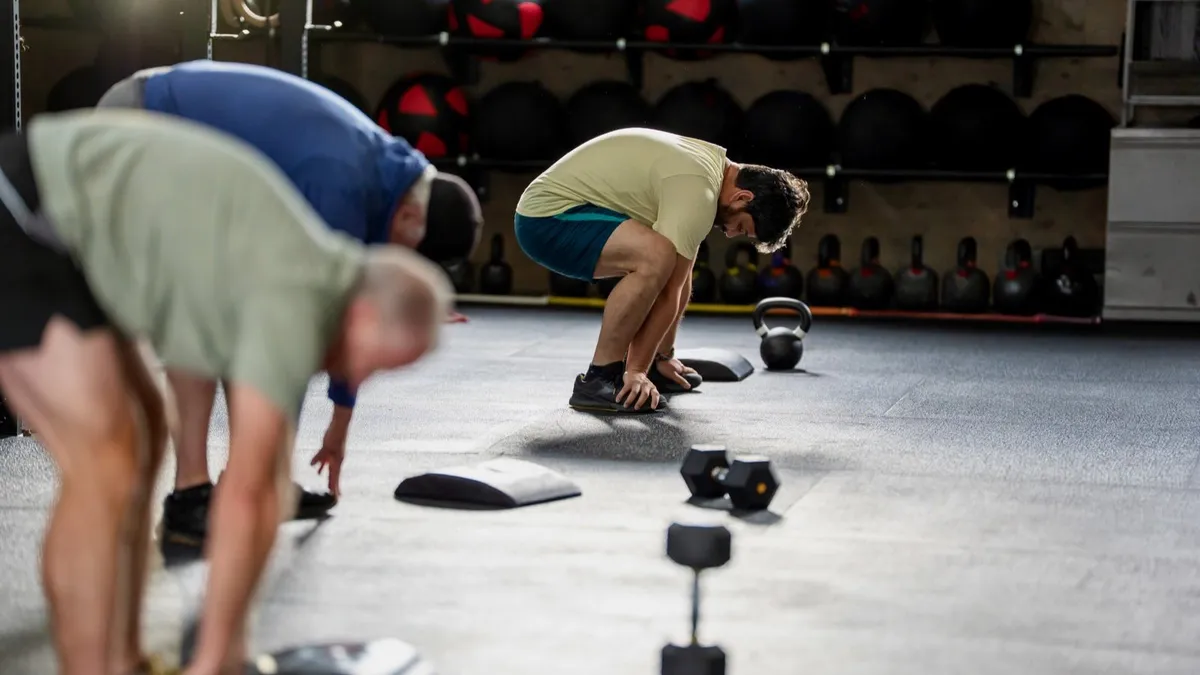
The fear is that you will walk in and be the most out of shape person in the room, and that everyone will clock it. The reality is that a gym at seven in the morning is a room full of people entirely occupied by their own set, their own breathing and their own plans for the rest of the day.
And in a coached session, the only person actually watching you is paid to, and has seen every possible version of day one. Including people who could not do a single push-up. Including people who had to sit down in the middle. None of it is new.
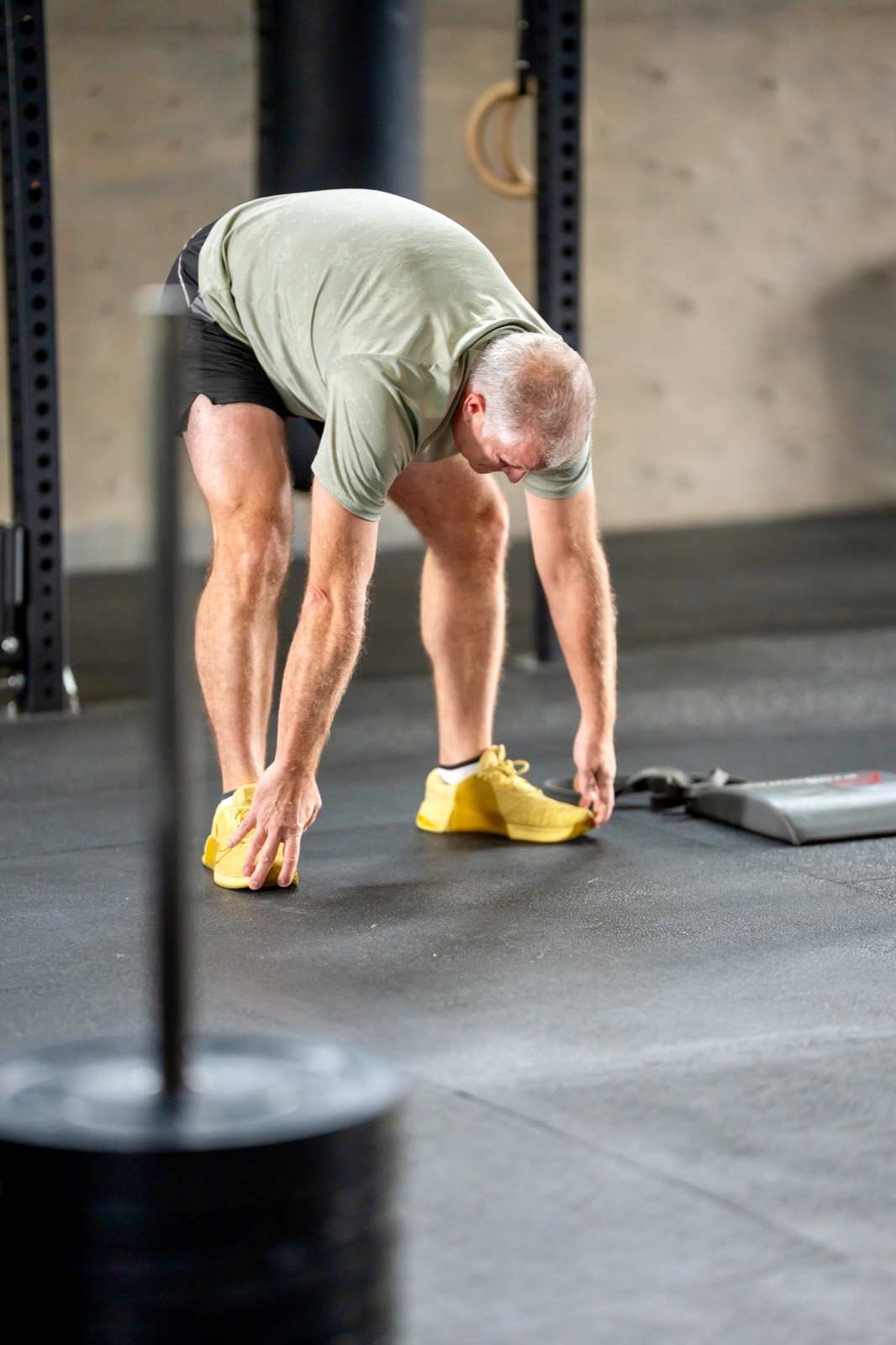
What the first two weeks actually feel like
Session one. Easier than you feared and harder than it should be. The weights are light, you are moving carefully, and your heart rate goes somewhere surprising on things that used to be nothing. That gap between what you remember being able to do and what you can do today is the genuinely uncomfortable part. It is also temporary.
Day two and three. The soreness arrives, and it usually peaks about 48 hours in rather than the morning after. It is worst after the first session and drops off quickly after that. Stairs will be funny for a day. This is normal and it is not damage.
Session two. This is the one that decides whether you come back. It is tempting to wait until the soreness has completely gone, but waiting makes it worse, because you reset the clock and get the same first-session soreness again. Going back while still slightly sore is the single most useful thing you can do in week one.
Week two. The soreness largely stops. Nothing visible has changed and you may feel discouraged by that. What has changed is your nervous system remembering how to do things, which is why the weights move better even though no muscle has been built yet.
Things you should expect to be bad at
Being warned makes these much less demoralising.
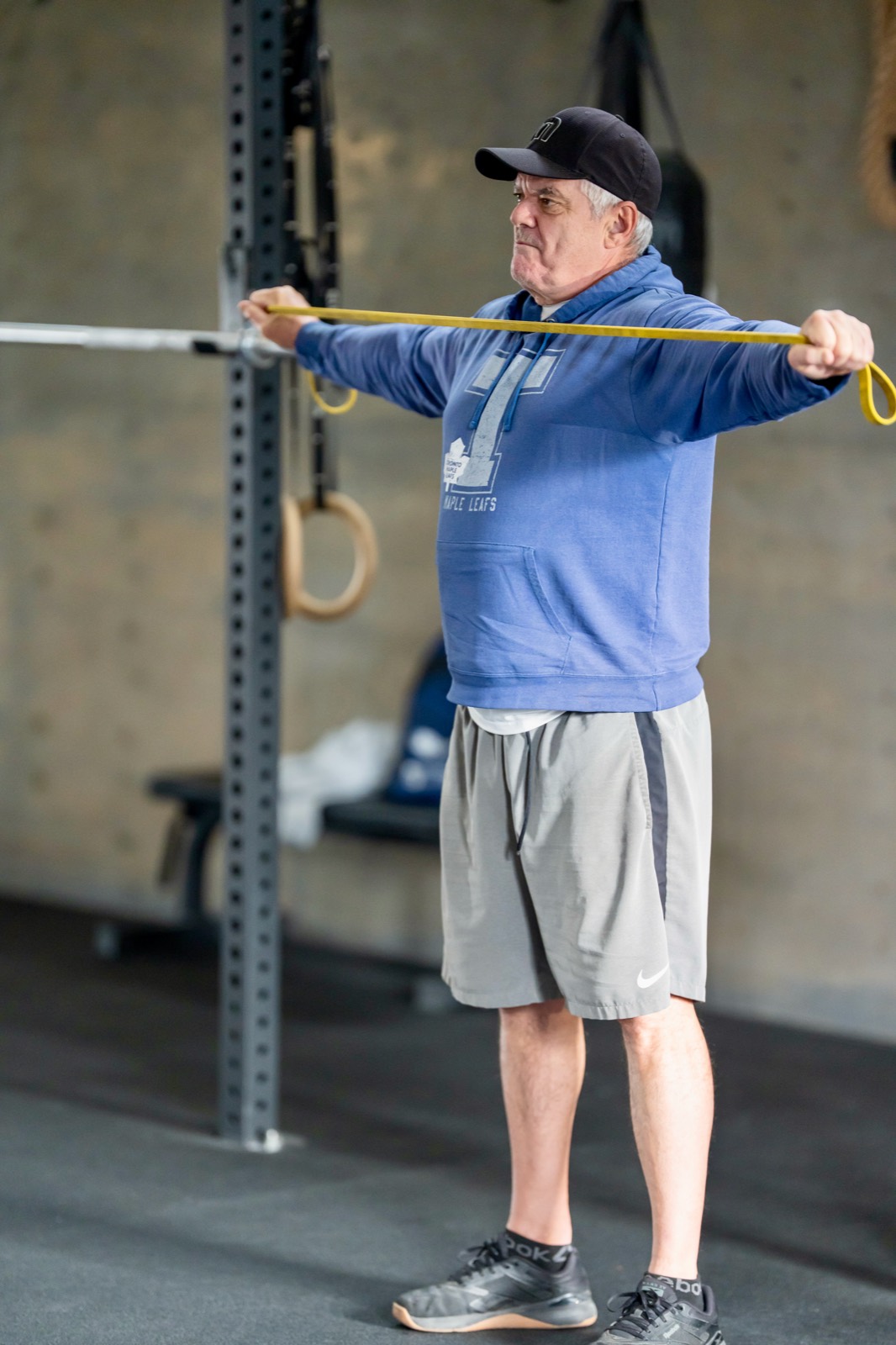
- Anything overhead. Shoulders lose range fast when unused, and desk work accelerates it. This is usually the most obvious gap and it comes back reasonably quickly.
- Balance on one leg. Almost everyone is worse at this than they expect. It is a skill, it degrades without practice, and it returns within weeks.
- Your grip giving out before the muscle does. Very common, very annoying, and it catches up within a month or so.
- Breathing. Conditioning drops faster than strength does, so you will feel out of breath on things that do not feel hard in your legs. That mismatch is normal.
None of these are signs you have left it too late. They are the predictable shape of detraining, and they resolve in roughly the order listed.
The mistake almost everyone makes
Doing too much in week one.
Motivation is highest on day one and it feels like the right moment to go hard. It is not. Five sessions in the first week, done with the fitness you had five years ago in mind, reliably produces an injury or a level of soreness that makes week two feel impossible. Then it is another year.
Two sessions a week that you actually keep doing beats five sessions you abandon by the fifteenth. That is not a motivational slogan, it is just how adaptation works: the body responds to repeated, survivable stress, not to one heroic week.
Want to see the place before you commit to anything?
Come in for a free consultation. We will talk through where you are, show you around, and there is no session attached to it unless you want one.
Book a free consultationWhat we do differently for people starting again
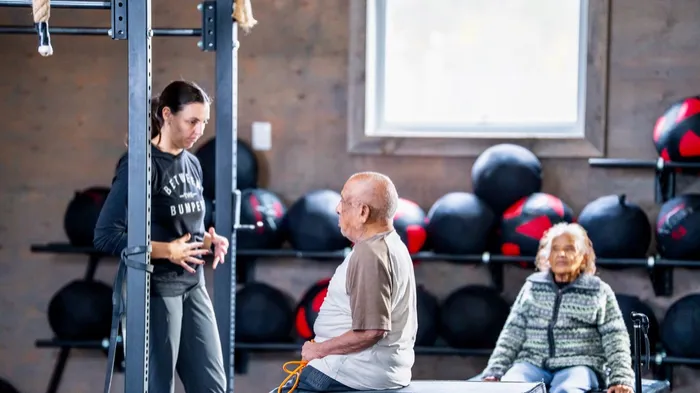
We do not put returning members into a class and hope. It starts with a conversation about what you used to do, what happened since, and what you are nervous about. That last one matters most and it is the question most gyms never ask.
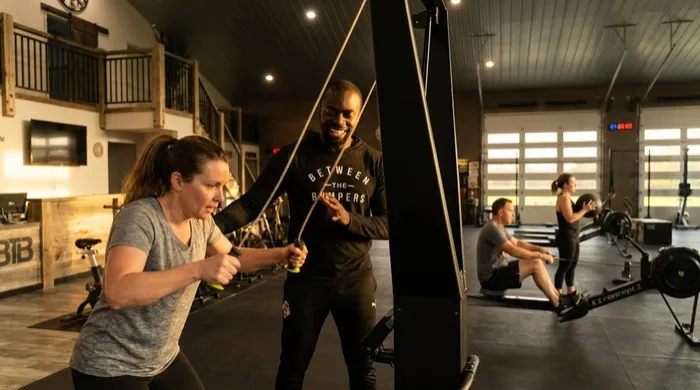
Every session is scaled. That is not a special arrangement made for beginners, it is how the classes are built, so there is no moment where you have to put your hand up and ask for the easier option in front of everyone. The coach has already set it.
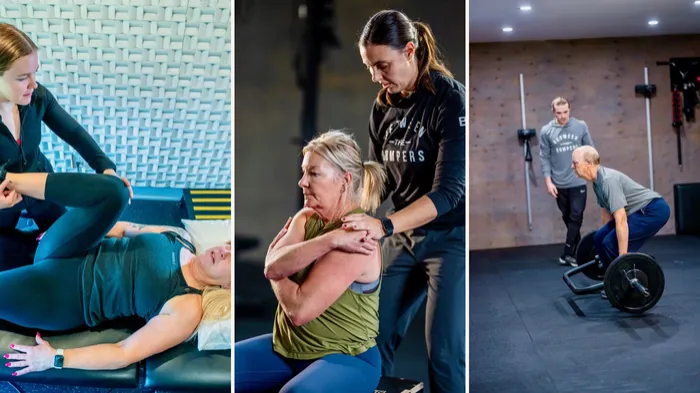
If something hurts rather than just feeling hard, we have a physiotherapist and an athletic therapist in the building, and the answer to a sore knee is an assessment rather than a shrug and a different exercise.
On the year you took off
It is worth saying plainly: the time away is not a debt you have to repay before you are allowed to start.
People arrive apologising for it. For the pandemic years, the injury, the job, the new baby, the parent they were caring for. None of that requires an apology and none of it changes what happens next. The body does not hold a grudge. It responds to what you ask of it now.
The only version of this that does not work is the one where you keep waiting until you are fit enough to start.
Common questions
I am really out of shape. Should I get fitter first?
No, and this is the most common reason people stay away for another year. Getting fitter is the thing you are coming to do. Everything is scalable, including the warm-up.
What if I cannot finish a session?
Then you stop, and that is a completely normal first session. Nobody is marked on completion. Finishing everything in week one would mean we set it too easy.
Will I be the oldest person there?
Almost certainly not. Our classes run from people in their twenties to people in their seventies, often in the same session.
I have an old injury that never really went away.
Then start with the physiotherapist rather than a class. One assessment first means your training is built around the real constraint instead of discovering it the hard way in week three.
How long until I feel normal again?
Most people stop feeling like a beginner at around three to four weeks. That is less about fitness and more about knowing where things are, what the warm-up is and who everyone is.
The car park is the hard part
Once you are through the door it gets much easier, much faster than you expect. Start with a conversation, no session attached.
Book a free consultation Book physiotherapy
Reading is a fine start. A conversation is a better one.
Twenty minutes with a coach, no workout, and an honest answer on where to begin.