Perimenopause and the Barbell: What Changes, and What to Do About It
A lot of women arrive here somewhere in their forties saying a version of the same sentence: I am doing everything I used to do and it has stopped working.
That is usually accurate, and it is usually not a willpower problem.
Perimenopause is the stretch of years before periods stop, and it is a hormonal transition rather than a switch. Estrogen does not decline politely in a straight line. It fluctuates, sometimes dramatically, and the things it was quietly supporting in the background start to show the strain. Among those things are bone, muscle, sleep quality, and how well you tolerate a hard session.
What actually changes
Bone loses its protection. Estrogen restrains the cells that break bone down. As it falls, that restraint loosens, and the years around the final period are generally when bone is lost fastest.
Muscle gets harder to keep. Not impossible, harder. The same training that used to maintain you now roughly holds the line, and holding the line is itself a win.
Recovery takes longer. Particularly when sleep is broken, which it often is.
Body composition shifts. Weight may not move much while the shape of it does, which is maddening if the scale is your only measure.
Sleep and mood get noisy. This affects training more than people credit. A badly slept week is not the week to test a maximum.
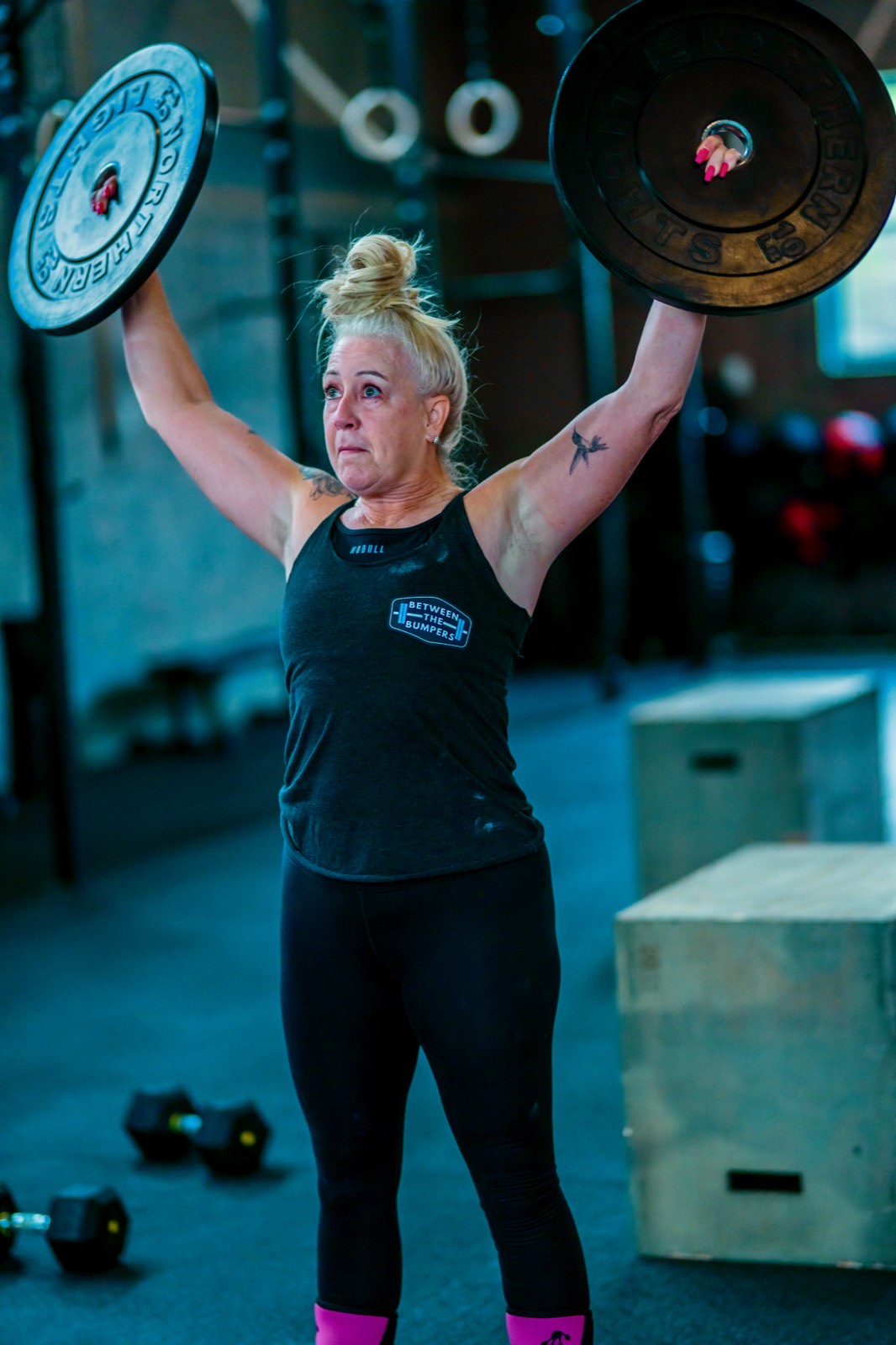
What this is not This is not a reason to train less, and it is not a signal to switch to lighter weights and longer cardio. The instinct to go gentler is extremely common and generally backwards. The tissue that is under threat, bone and muscle, responds to load. It does not respond to caution.
What to actually do
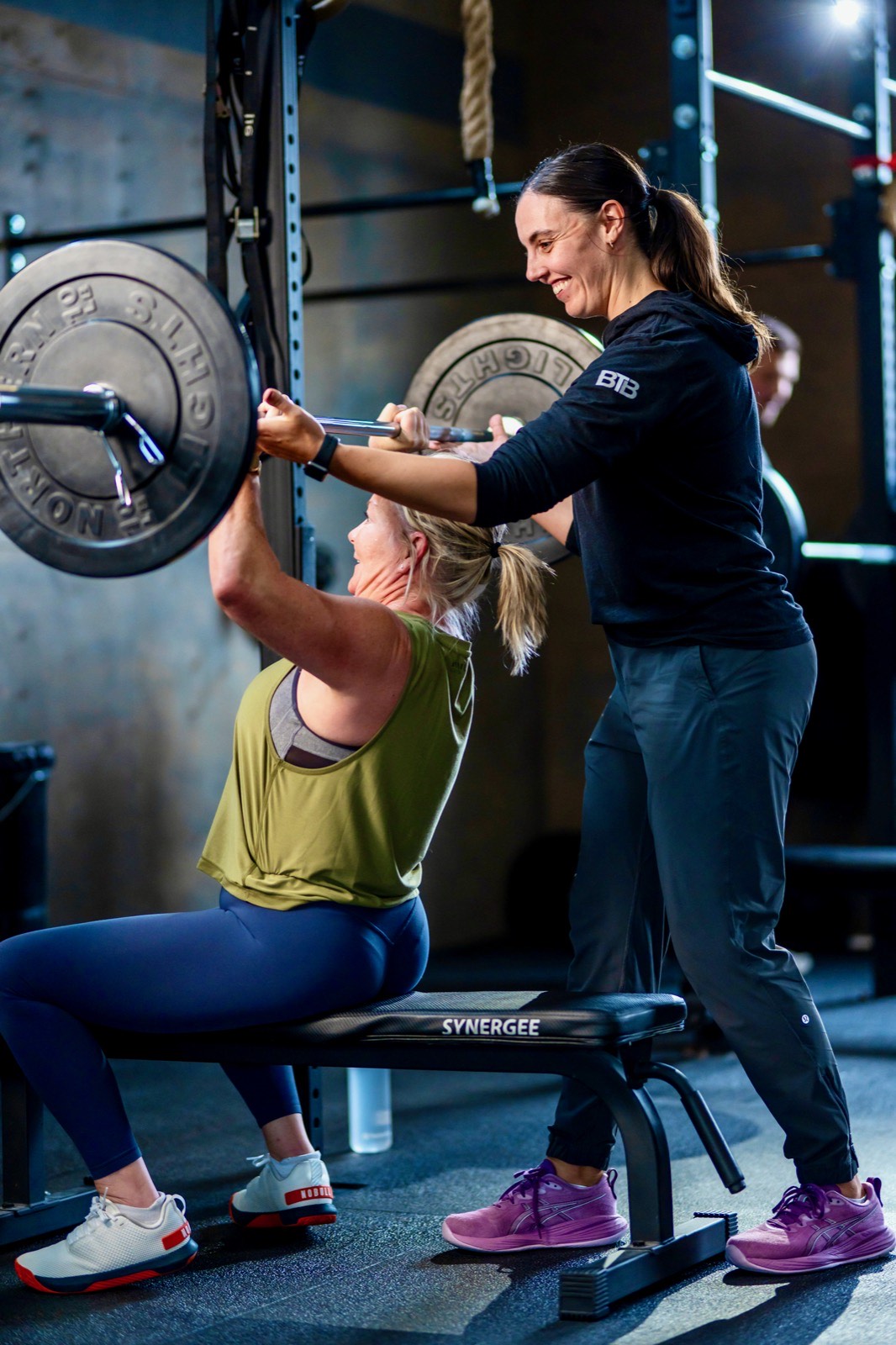
Lift properly heavy, with a coach watchingNot a bodypump class with pink dumbbells. Squats, hinges, presses, rows and carries, loaded so the last couple of repetitions are genuinely difficult, progressed over months. This is the single highest-value thing available to you.
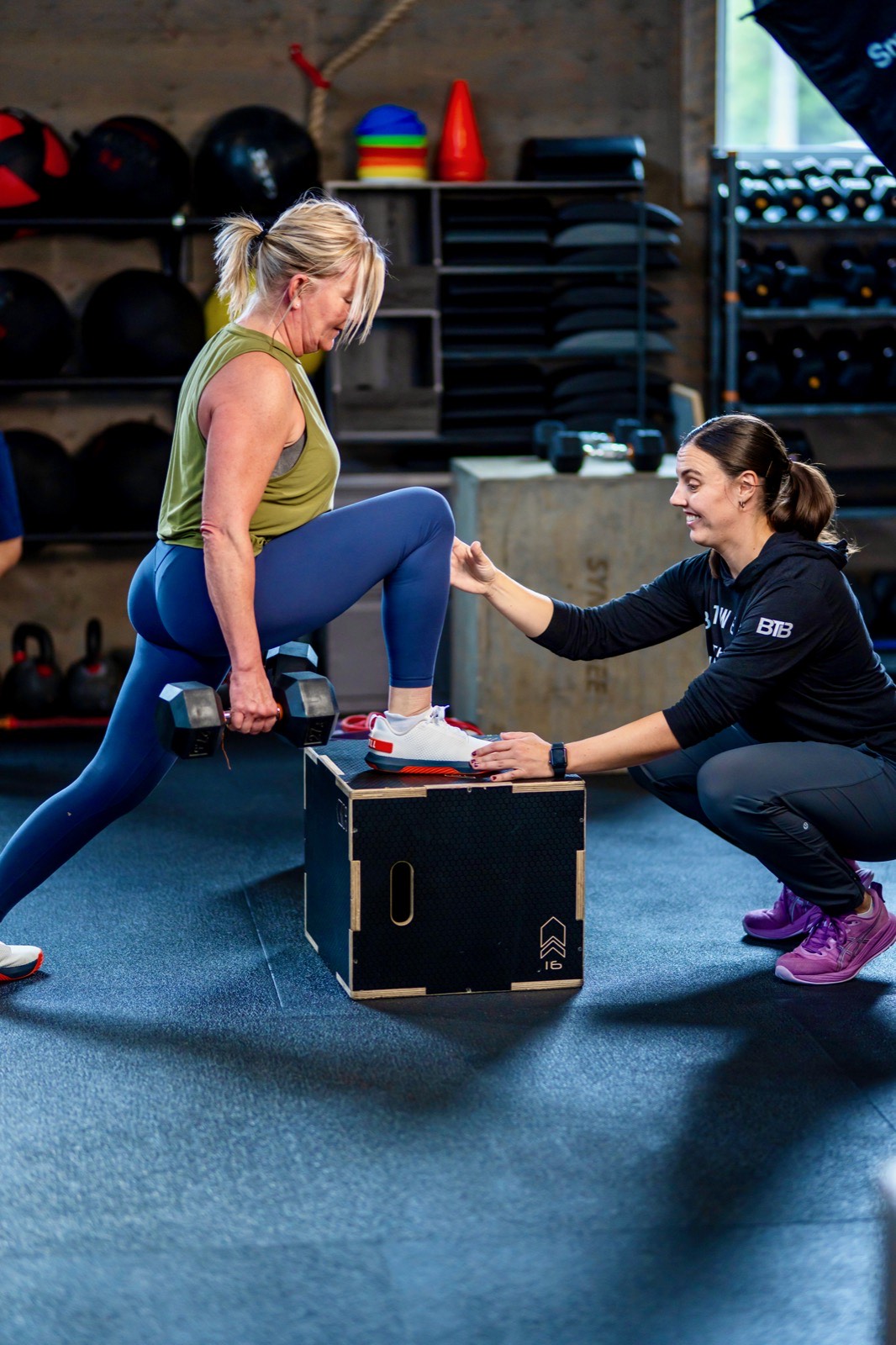
Put impact in, if your joints and your bones allow itSkipping, hopping, brisk stair work. Bone responds to being startled. This one needs clearing first if you already have a diagnosis, which is the next article.
Protect proteinRequirements go up at exactly the age most people start eating less. Spread it across the day rather than loading it all at dinner.
Train hard less often rather than moderately all the timeTwo or three quality sessions beat five rushed ones, especially when recovery is already compromised.
Measure something other than the scaleWhat you lift, how many push-ups, how fast you cover a distance, how you sleep. The scale is the least informative number available to you right now.
The part people are embarrassed to ask
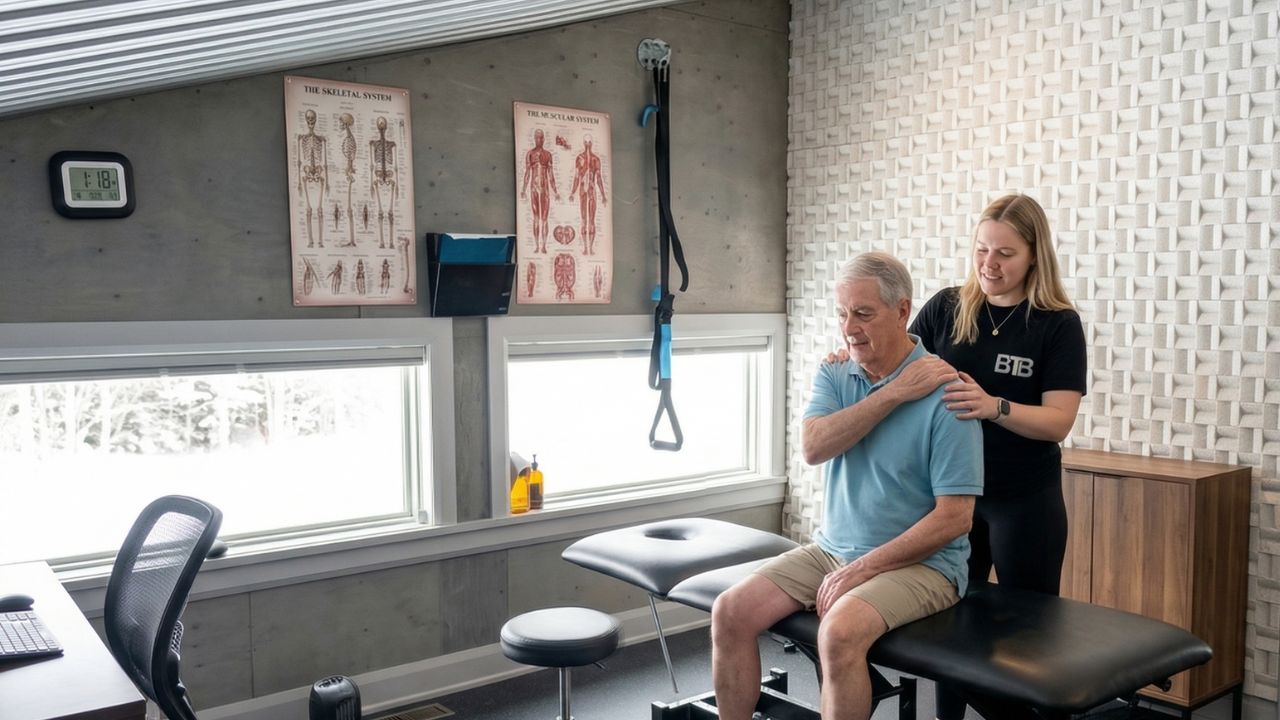
Pelvic floor symptoms, leaking during jumping or heavy lifting, and the feeling that something is not quite supported are extremely common in this window and almost never mentioned out loud. They are also treatable. Our physiotherapist can assess it, and if it sits outside her scope she will tell you who to see. Nobody here is going to react to you raising it.
Hormone therapy is a conversation for your physician, not for a gym. What we will say is that it and strength training are not competing options, and plenty of people do both.
Not sure where you are starting from?
Eight questions, about two minutes. You get a score across strength, cardio engine, mobility, energy and habits, plus the one thing to work on first.
Common questions
I have never lifted a barbell. Is it too late to start?
No, and this is the best argument for starting now rather than later. People beginning in their forties and fifties make quick early progress, because almost everything is new stimulus.
Will lifting heavy make me bulky?
No. The hormonal environment you are asking about is the precise reason that does not happen. What you are fighting for is the muscle you already have.
I am exhausted. Should I train anyway?
Usually yes, but shorter and less ambitious. A cut-down session on a bad week keeps the habit and does not dig the hole deeper. Skipping the week entirely is what tends to end things.
Does cardio still matter?
Very much, for your heart and your head. It just should not replace lifting, which is the error most people make in this decade.
Do I need to see a physio first?
Only if something hurts or you have a diagnosis that worries you. Otherwise start with a conversation and an assessment on the gym floor.
Start properly
A No-Sweat Consultation is a twenty minute conversation, no workout and no pressure. If what you need is clinical, we will put you in front of Megan instead.
Book a No-Sweat Consultation Book physiotherapy
Written by the team at Between The BumpersPhysiotherapy, athletic therapy, coached classes and personal training under one roof in Stittsville since 2017.
Where to next
Not sure where to start?Eight questions, two minutes, an honest recommendation.Physiotherapy with MeganNo referral, pay per visit, book online.Strength as we ageWhy loading matters more every decade.Had a bone scan?What osteopenia and osteoporosis mean for training.
This article is general information and is not individual medical advice. Everything here depends on your own history, your scan or imaging if you have had any, and what your doctor or specialist has already told you. Speak to a regulated health professional before starting or changing exercise, and if anything your surgeon, physician or physiotherapist has told you contradicts what you read here, theirs wins.
